Stages
Théâtre de l’Archevêché
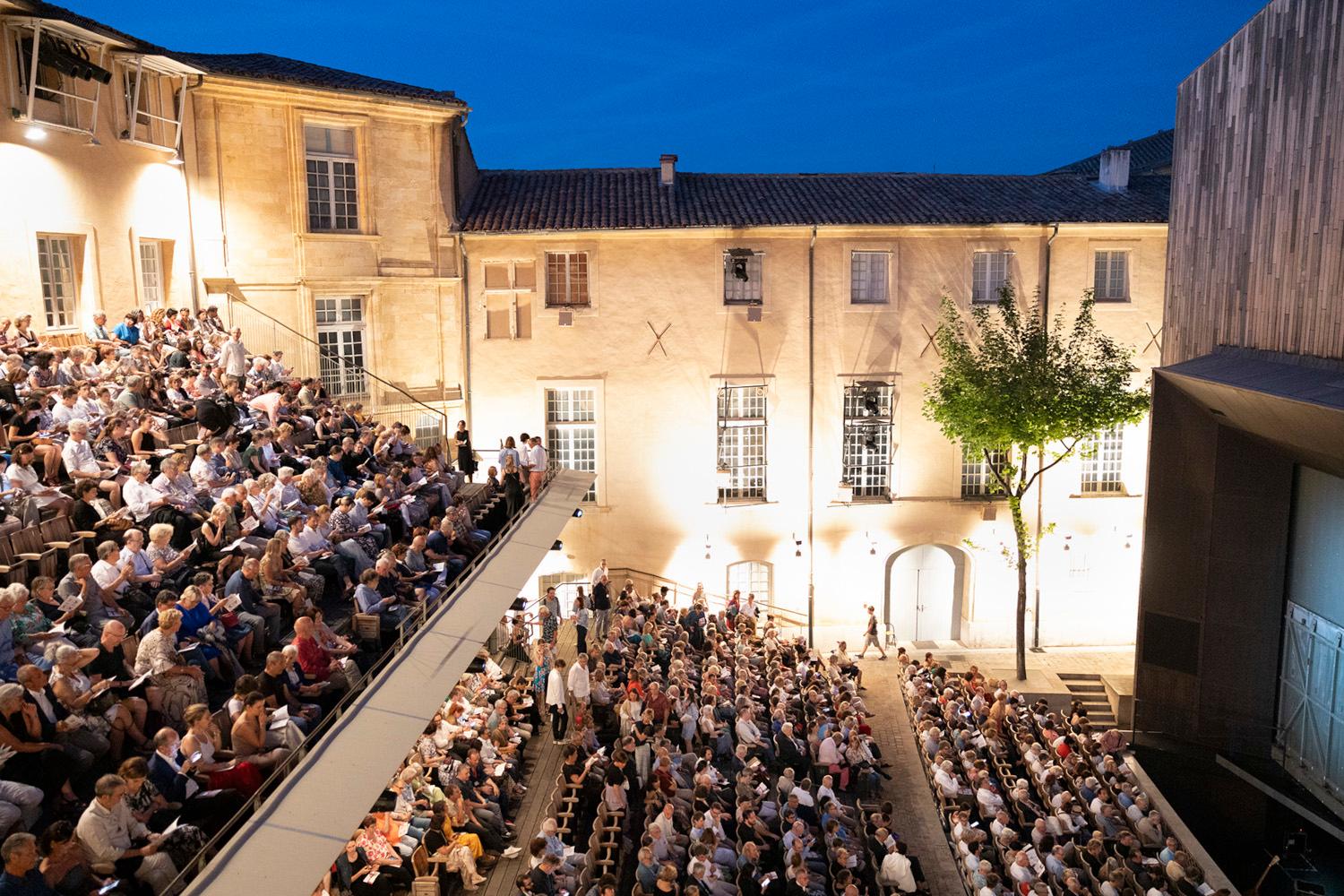
Théâtre de l’Archevêché
Palais de l’Ancien Archevêché
Place des Martyrs de la Résistance
13100 Aix-en-Provence
Pasteur, Briand, Bourse and Bellegarde bus stops, about 5 minutes’ walk from the theatre > find your route
New! Shuttle services will take you back to Marseille after The Magic Flute > book your return shuttle now
Pasteur and Bellegarde car parks, about 5 minutes’ walk from the theatre > carpool
With its grand staircase, medieval arches and 17th century wings enclosing an almost square space, the courtyard of the former archbishop’s palace in Aix is a jewel in the architectural crown of Aix-en-Provence and one of the locations that most memorably evokes the past of its historic centre. It was made into a theatre in 1948 and is now the venue most closely associated with the Festival. It was last refurbished in 1998, when the facades were restored and work was undertaken to create a special relationship between stage and audience. Every summer, the Théâtre de l’Archevêché exudes a magical atmosphere, which François Mauriac described as reminiscent of “Don Juan among the stars”.
Grand Théâtre de Provence
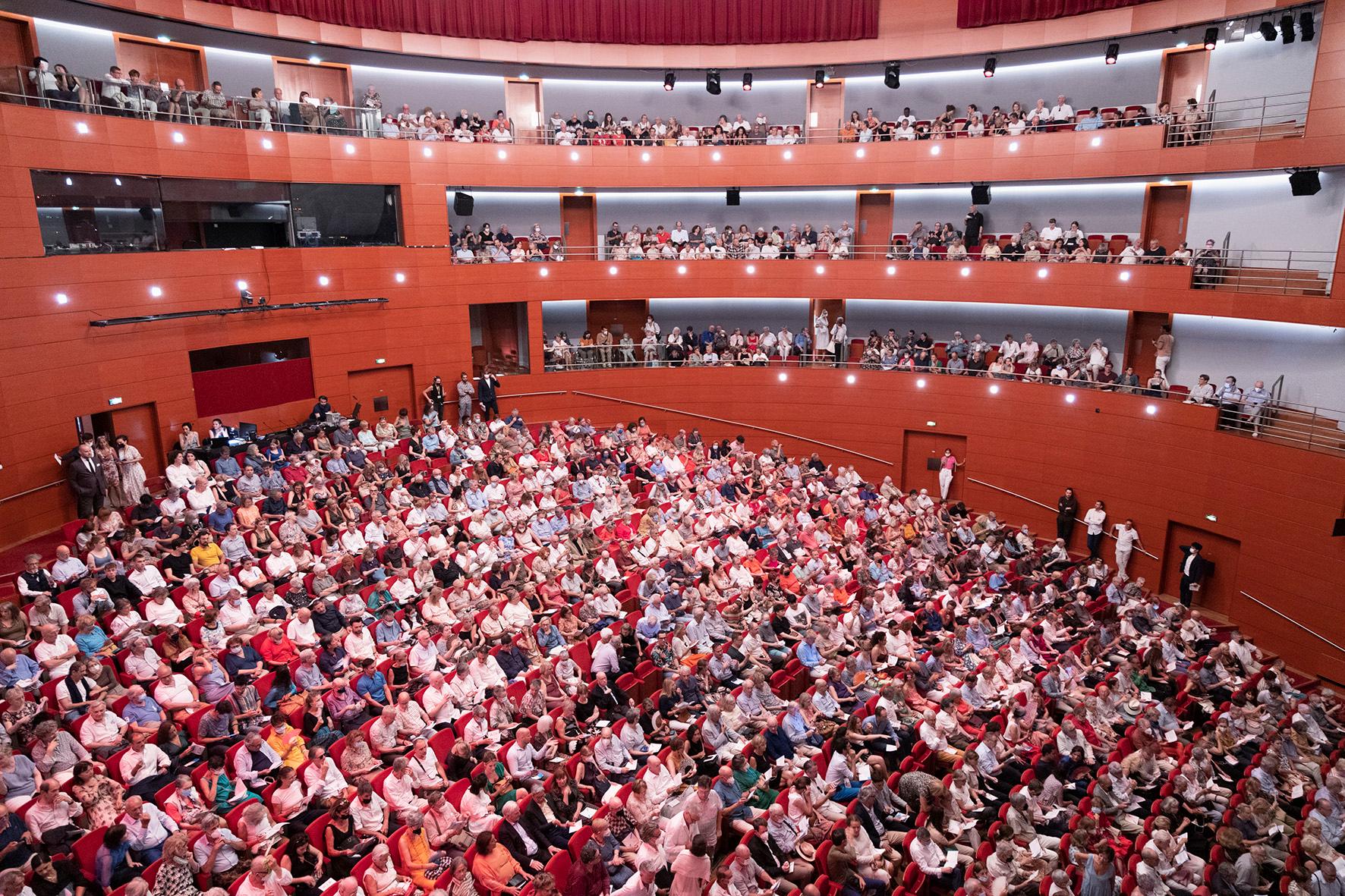
Grand Théâtre de Provence
380, avenue Max Juvénal
13100 Aix-en-Provence
Cité du Livre, Archives, Rotonde and Gare routière bus stops, about 5 minutes’ walk from the theatre > find your route
Méjanes and Rotonde car parks, about 5 minutes' walk from the theatre > carpool
Designed by Vittorio Gregotti, this theatre was inaugurated in July 2007 by the Festival d'Aix-en-Provence with a performance of Richard Wagner’s Die Walküre. Its entirely curved volume encloses a seating capacity of 1,350, some 950 of which are in the stalls. The theatre is situated in the area between the new town and the historic centre of Aix.
Théâtre du Jeu de Paume
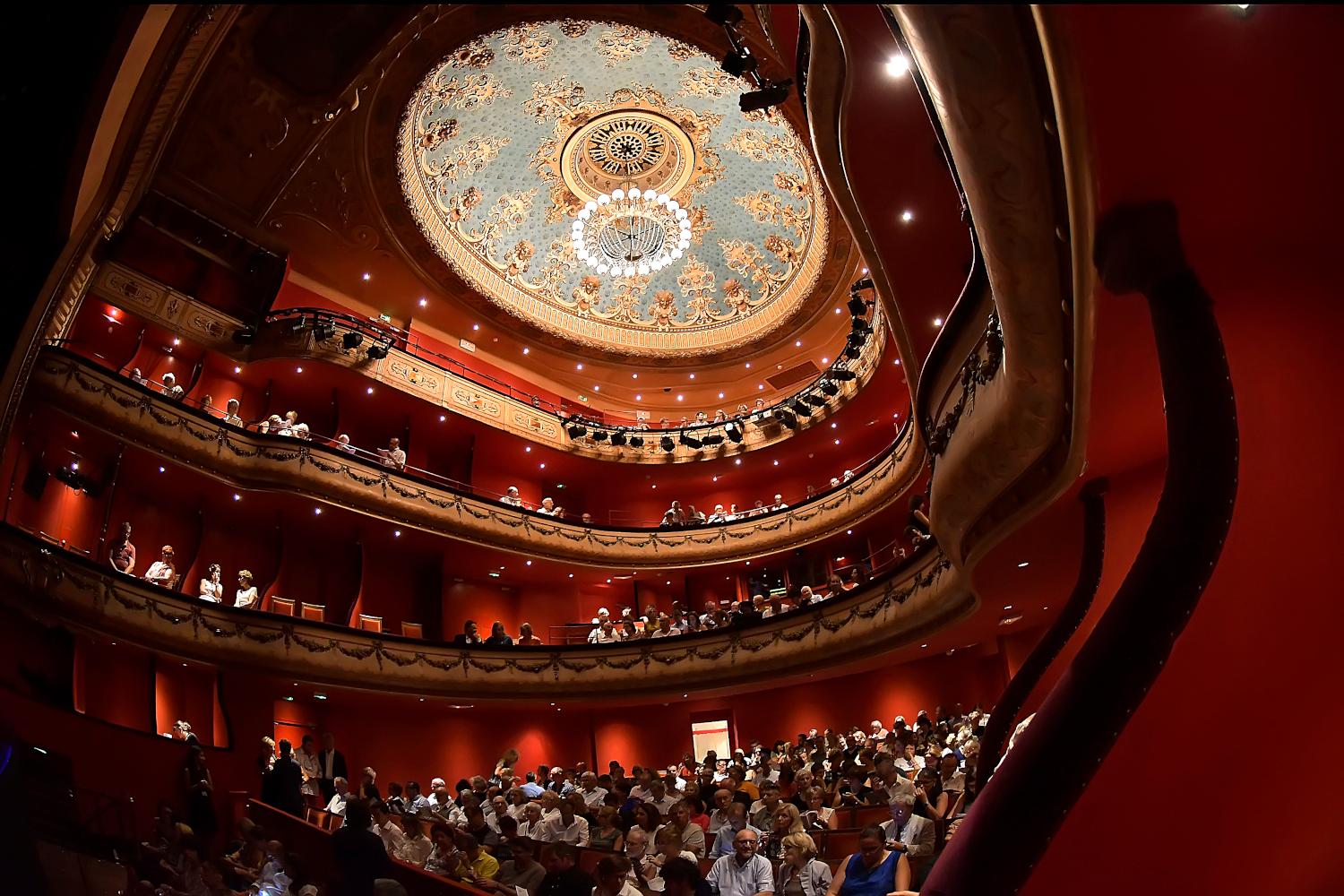
Théâtre du Jeu de Paume
17 - 21, rue de l'Opéra
13100 Aix-en-Provence
Ganay, Mirabeau Italie and Miollis bus stops, about 2 minutes’ walk from the theatre > find your route
Carnot car park, about 5 minutes' walk from the theatre > carpool
This is where Louis XIV used to play ‘la paume’ – an early type of indoor tennis in 1660. Converted into a theatre during the following century, it is one of the last surviving examples – together with the Théâtre de la Reine in Versailles – of an 18th century Italian-style auditorium. Its plush red velvet décor makes it an ideal venue for intimate operas, contemporary creations, recitals or chamber music concerts.
Conservatoire Darius Milhaud
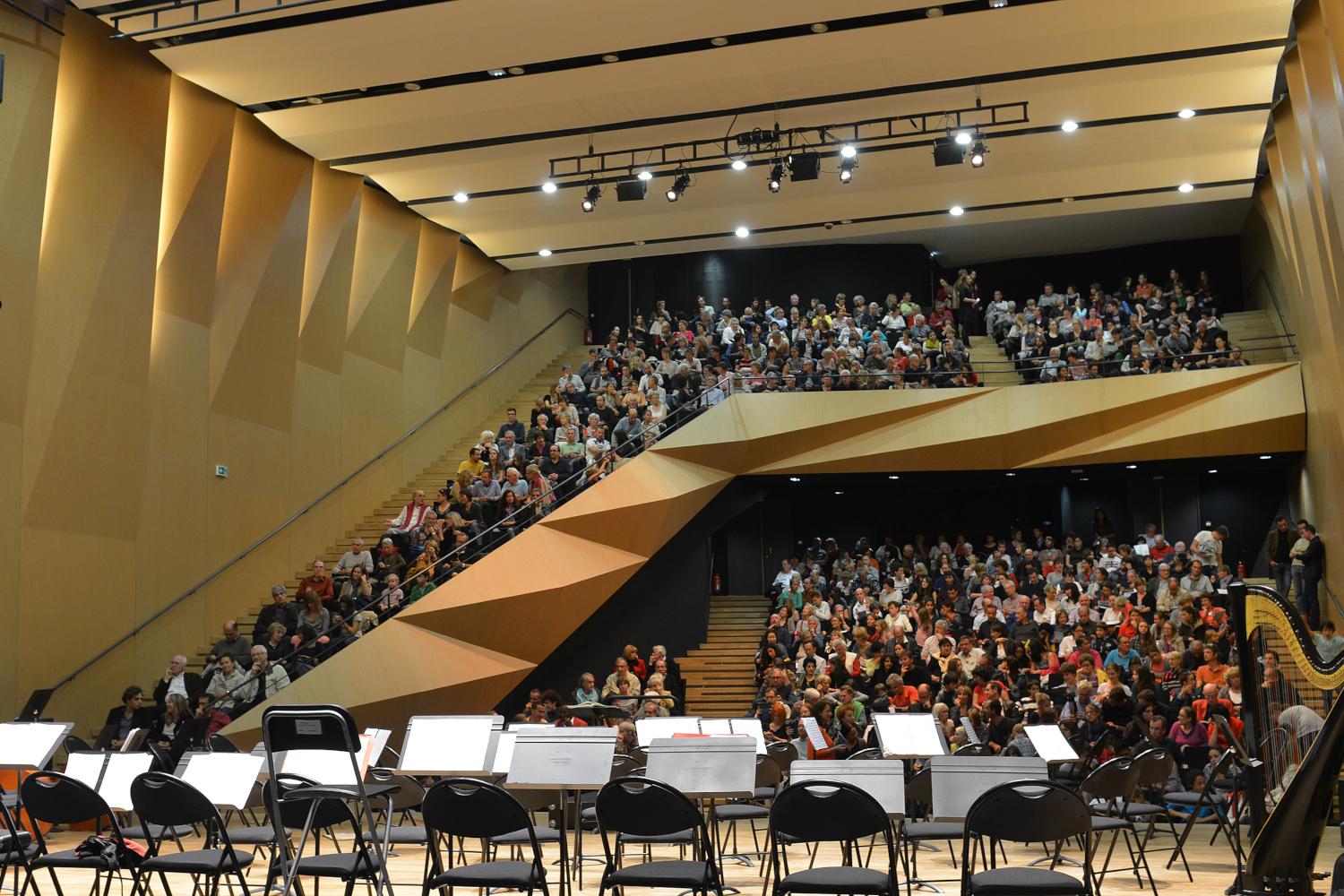
Conservatoire Darius Milhaud
Forum culturel
380, avenue Wolfgang Amadeus Mozart
13100 Aix-en-Provence
Cité du Livre, Archives, Rotonde and Gare routière bus stops, about 5 minutes’ walk from the Conservatoire > find your route
Méjanes and Rotonde car parks, about 5 minutes' walk from the Conservatoire > carpool
The Darius Milhaud Conservatoire (CRR) lies at the very heart of the Aix cultural centre. It was designed by Japanese architect Kengo Kuma and inaugurated in 2013. His Campra auditorium, crafted mainly out of wood, boasts a 240 m² stage, can accommodate an audience of 500 people, and with great accoustics.
Pavillon Noir
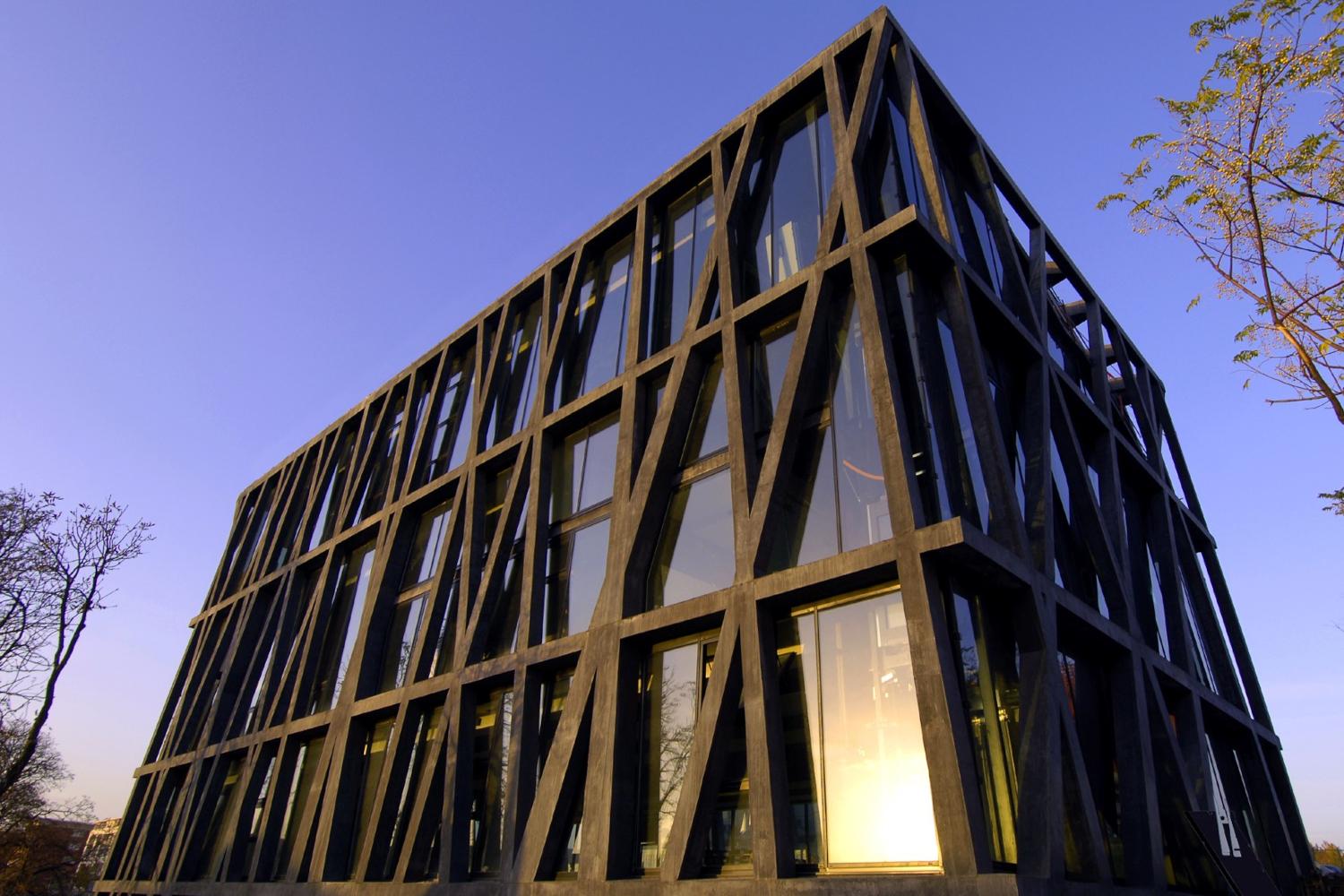
Pavillon Noir
530, avenue Wolfgang Amadeus Mozart
13627 Aix-en-Provence
Cité du Livre, Archives, Rotonde and Gare routière bus stops, about 5 minutes’ walk from the Pavillon Noir > find your route
Méjanes and Rotonde car parks, about 5 minutes' walk from the Pavillon Noir > carpool
Designed by the architect Rudy Ricciotti and inaugurated in 2006, the Pavillon Noir (“Black Pavilion”) is home year-round to the Ballet Preljocaj, founded by choreographer Angelin Preljocaj. This unique architectural structure, made of glass and concrete, is equipped with four rehearsal halls and a 378-seat performance hall.
